Style & materials 03/18/2026
Types of Plasterboard: Advantages and Applications
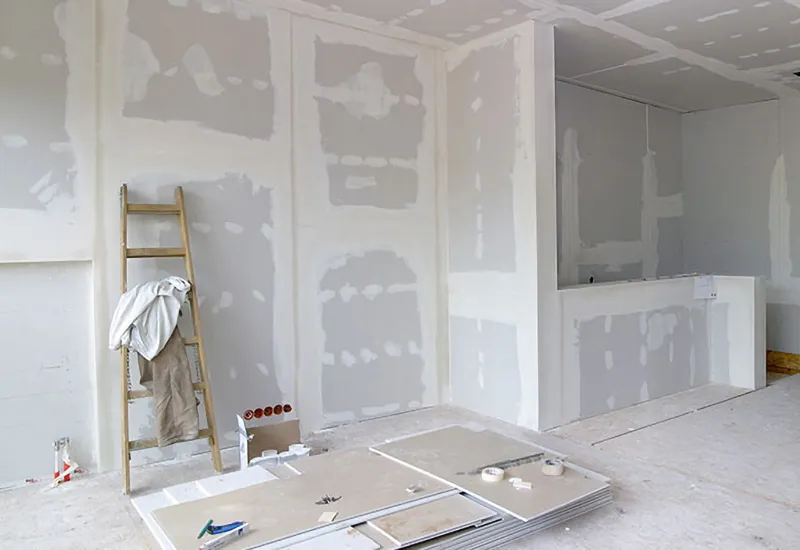
How many types of plasterboard are available on the market, and which ones are the most commonly used in construction and modern design? We’ll explore that together in the following paragraphs.
More specifically, we’ll look at the different types of plasterboard, their uses, the standard sizes available, and finally how to choose the product that best suits your interior design needs.
Types of plasterboard
Plasterboard has become a key element in the world of modern construction. Originating in the 19th century and invented by the American Augustine Sackett, plasterboard has evolved into one of the most versatile and in-demand materials, especially for fast construction and efficient renovations.
Its availability in DIY stores at competitive prices, together with the fact that it comes in different forms such as panels and boards, makes it an accessible choice for many.
A plasterboard wall can be 8–10 cm thick and is made up of two boards with a cavity filled with insulating and/or sound-absorbing material. To provide a complete overview of this topic, we will cover the following below:
- Standard plasterboard
- Moisture-resistant plasterboard
- Fire-resistant plasterboard
- Sound-insulating plasterboard
- High-density plasterboard
Standard plasterboard
Standard plasterboard is a building material with an extremely simple composition, yet within a board just a few centimeters thick it offers remarkable versatility.
Its composition is as follows: 93% is made of a mixture of water and gypsum, while the remaining 7% consists of high-strength cardboard. The result? A lightweight, functional, and economical board.
This solution can be used to create internal walls, ceilings, and cladding. Its ease of installation and long-lasting durability make it a popular choice for many projects.
Moisture-resistant plasterboard
Moisture-resistant plasterboard has characteristics very similar to the previous type. It is highly durable, versatile, and can be used in a variety of settings where humidity levels are higher than normal.
In addition to gypsum and cardboard, which are the main elements of standard plasterboard, moisture-resistant plasterboard is coated with an extra protective layer against moisture and temperature fluctuations.
Its applications range from bathrooms and laundry rooms to poorly ventilated basements. Moisture-resistant plasterboard is often preferred over the standard type for kitchen ceilings.
Fire-resistant plasterboard
Fire-resistant plasterboard is the perfect product for use in homes or public spaces where there are areas heavily exposed to heat sources, such as rooms with fireplaces or cooking areas.
By nature, this material offers greater resistance to high temperatures thanks to mineral fibers added to the gypsum, which act as a real reinforcement against heat and flames.
Sound-insulating plasterboard
Sound-insulating or sound-absorbing plasterboard is an extremely effective product for preventing noise from spreading between adjacent rooms. Its composition differs from the types mentioned above.
A sound-absorbing plasterboard panel is made up of two high-density boards enclosing several layers of soundproofing materials such as polyester fiber or lead rubber.
This solution is used by those who want to preserve a certain level of acoustic privacy by reducing noise in spaces such as music rooms, gaming rooms, reading rooms, cinemas, or hotel bedrooms.
High-density plasterboard
Among the best-performing types of plasterboard, high-density plasterboard — or more technically, “fiber-reinforced” plasterboard — certainly stands out. As the name suggests, this is not a standard plasterboard panel.
This product was designed to deliver higher mechanical and structural performance than the standard version. This means greater load resistance, as well as improved fire resistance and sound insulation.
Its applications are very varied. It can be used to divide noisy environments such as bedrooms, offices, and meeting rooms. It is also ideal in spaces where suspended elements need to be installed, such as sanitary fixtures or kitchen wall cabinets.
Plasterboard sizes
Plasterboard is one of the lightest, strongest, and easiest-to-find materials in the building industry. It can be found in virtually any home improvement or construction supply store.
Among the most common sizes available on the market, regardless of the type of plasterboard you want to buy, are:
- Standard width – 120 cm
- Common lengths – 200 cm, 250 cm, 280 cm, 300 cm
As for thickness, dimensions may vary depending on the specific product you want to purchase.
Among the main thicknesses, when choosing standard plasterboard, you can find:
- 12.5 mm – the standard for walls and lining walls
- 10 mm – practical and lightweight, especially for suspended ceilings
- From 6 mm to 9 mm – ideal for cladding curved walls
Plasterboard costs
It is always a bit difficult to define the exact cost per square meter of plasterboard, due to all the details that must be considered in order to make accurate estimates.
Generally speaking, the cost per square meter, including installation, can range from around €30 for a standard product up to €70 for high-quality solutions.
As mentioned above, the price must take several factors into account, including:
- The quality and type of plasterboard used
- The thickness required for the wall
- The installer’s labor costs
- Special work such as ceiling coves or decorative structures
- The type of installation required, whether linear or curved
How to choose the best type of plasterboard
To accurately choose the type of plasterboard to install in a building project, several factors must be considered: budget, interior style, and the different requirements of each room.
As we have seen in the previous paragraphs, each space corresponds to a specific product, and every product other than the standard one comes with a different price point.
As for style, plasterboard is perfect for achieving a minimalist look, creating smooth, seamless walls that blend harmoniously into minimalist interiors.
It also pairs perfectly with industrial style, as it allows for the creation of simple yet visually striking structures. It can be left unfinished or coated with cement-based plaster to maintain the rough and authentic industrial appearance.
Plasterboard is also well suited to Scandinavian-style interiors. Simply finish it with neutral, bright colors to enhance natural light in every room and create a greater sense of space and tranquility.
Plasterboard trends for 2026
In 2026 as well, plasterboard continues to be a highly trendy building material. Thanks to its versatility and relatively low purchase and installation costs, it remains a true star in the construction world.
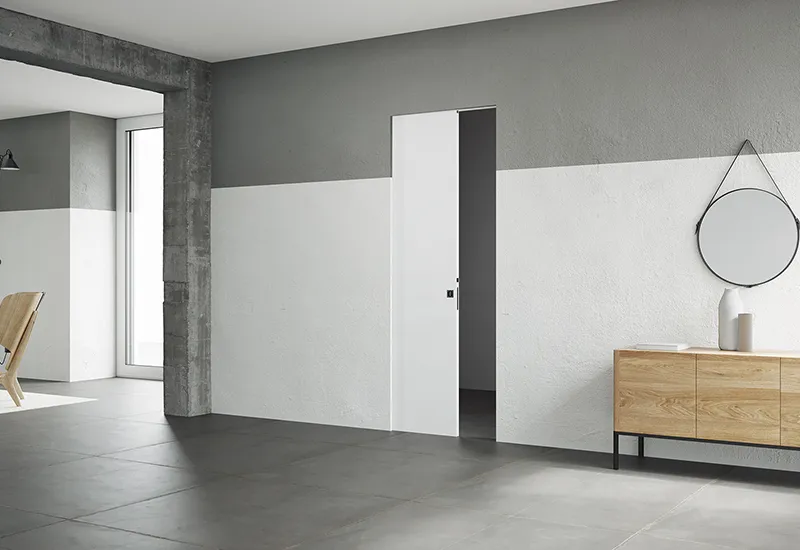
Today, this material is often paired with another extremely functional and high-end product: flush interior doors, either sliding or hinged.
Flush doors are a highly appreciated design feature because of their ability to integrate perfectly with walls. Plasterboard is the ideal material for creating structures that house this product, offering both aesthetic and functional solutions.
Flush doors can be painted or covered with wallpaper, making it possible to preserve visual continuity and harmony throughout the interiors.
Now that we’ve reached the end of this article, which has allowed you to discover all the types of plasterboard currently used, one thing is clear: whether for new builds or renovations, plasterboard is the most efficient and innovative solution for improving the functionality and aesthetics of interior spaces.