Technical insights 02/02/2026
Colors for modern and classic interior doors
Choosing the right colors for modern interior doors can enhance a space by creating harmony or contrast, depending on the style you want to achieve. In this short guide, we’ll look at how different shades can play a key role in creating an effective result.
We’ll explore how to match the colors of interior doors with other furnishing elements, the psychology behind certain shades, and finally, the trends for 2026.
We invite you to read the following paragraphs carefully to discover all the color combinations for interior doors that can help you achieve an elegant, refined, and balanced look.
A guide to choosing colors for interior doors
In this article, which will guide you step by step in choosing the perfect colors for your modern or classic interior doors, we’ll discuss various finishes and shades that, in recent years, have rewritten the rules of design.
Specifically, we’ll cover these options:
- Neutral colors for interior doors;
- Pastel shades;
- Lacquered colors for classic or modern doors;
- Colors for wooden interior doors;
- Dark shades for elegant and minimalist doors;
- Golden details for a touch of class.
Neutral colors for interior doors
Have you ever noticed? In modern design, which can be seen in many properties built in Italy in recent years, neutral colors such as white, gray, and black prevail. These colors create a clean, sophisticated, and minimalist look.
White, for example, is widely used for its ability to visually enlarge spaces and reflect natural light. Black and gray, especially in matte finishes, are used instead in settings where a very elegant and essential style is desired.
Pastel colors for interior doors
Pastel tones such as light blue, mint green, and powder pink are becoming increasingly popular in projects that aim to highlight modern design. They are especially suitable for rooms such as bedrooms, studies, and bathrooms.
These colors add a touch of freshness and delicacy to interiors without making them feel heavy. They are ideal for people who love color and want to create a serene and playful atmosphere.
Lacquered colors for interior doors
Lacquered doors with glossy or matte finishes are a contemporary choice that brings elegance and balance. They are suitable for classic, Scandinavian, as well as modern and minimalist interiors — such as industrial style, for example.
Glossy finishes reflect light and create a sense of depth, especially in small spaces with little natural light. Matte finishes, on the other hand, offer a more understated and sophisticated look.
A lacquered color is especially perfect for creating contrast with other furnishing elements. If a room feels overloaded with dark colors, an interior door with a glossy lacquered finish can provide the balanced contrast needed to achieve a harmonious result.
Colors for wooden interior doors: light and dark tones
Wooden interior doors have timeless charm. In addition, the material is extremely versatile and full of character. With the right shade, you can highlight its finest features, such as the grain and natural lines.
Oak, walnut, and cherry are among the most appreciated shades for their beauty. They give the element a light finish that is perfect for Scandinavian-style interiors. Dark tones such as brown, mahogany, and wenge are widely used as finishes for classic doors.
These colors add a touch of refinement to a room, creating visual contrast with light walls, furniture, and flooring.
Golden details for interior doors
Classic doors, or modern doors with an eccentric or extravagant character, often feature golden details such as frames, handles, and hinges. These decorative elements enrich the appearance of the door, making it a focal point of the décor.
They are suitable for highly regal settings, such as historic villas, or for modern interiors deliberately designed to go beyond the conventional boundaries of design.
How to match the colors of interior doors
Choosing the color of interior doors is a crucial aspect of home décor, capable of transforming the look of spaces and reflecting personal style. Experimenting with interior door colors can lead to surprising results, making the home a special place.
For example, white doors are very versatile elements and go well with walls of any color. For a modern look, they can be paired with walls in bold or pastel tones and baseboards that echo the same color and texture as the interior door.
The approach changes significantly if you want to create a relaxing, minimalist, and uniform environment, as in Scandinavian style. In this case, a natural wood door fits perfectly into the décor because it creates a harmonious choice in balance with the other elements in the room.
In a classic setting, on the other hand, white doors — especially glossy ones — create an elegant contrast with ivory, cream, or taupe walls. However, if you’re very creative, you can introduce interior doors with green, blue, or yellow finishes which, in contrast with neutral walls and baseboards, offer a highly striking visual effect.
The psychology of colors for interior doors
Colors do not simply serve to beautify interiors or add character and elegance. Behind the choice of every shade lies a true psychology of color, which explains how certain emotions and levels of comfort can be achieved.
Colors influence our mood and perception. For example, blue, brown, beige, and green are relaxing colors, ideal for bedrooms, bathrooms, or spaces where you want to create a sense of serenity. Yellow, red, orange, and black, by contrast, are bold and energizing colors, perfect for kitchens or living areas.
That is why it is always important to pay close attention to the choice of finishes for floors, walls, and interior doors: ultimately, every room in the house is being designed to create feelings and atmospheres that align with our needs.
How to choose the color of interior doors
To make a decision about the color of interior doors, you need to consider what kind of environment you want to create. There are many approaches and opinions, but broadly speaking, you can follow two paths:
- Match walls and doors using the same shade;
- Create contrast among the various elements of the home.
In the first case, the goal is to create a uniform, harmonious, and flexible environment that conveys calm and relaxation.
The second approach, by contrast, is to break up the chromatic harmony of the furnishings by turning the door into a focal point of the space. Through this method, colored doors achieve a modern and very playful effect.
Be careful, however, not to overdo it with too many shades, or you risk creating a space that feels overloaded, confusing, and unwelcoming. In life, as in home décor, balance and harmony are essential.
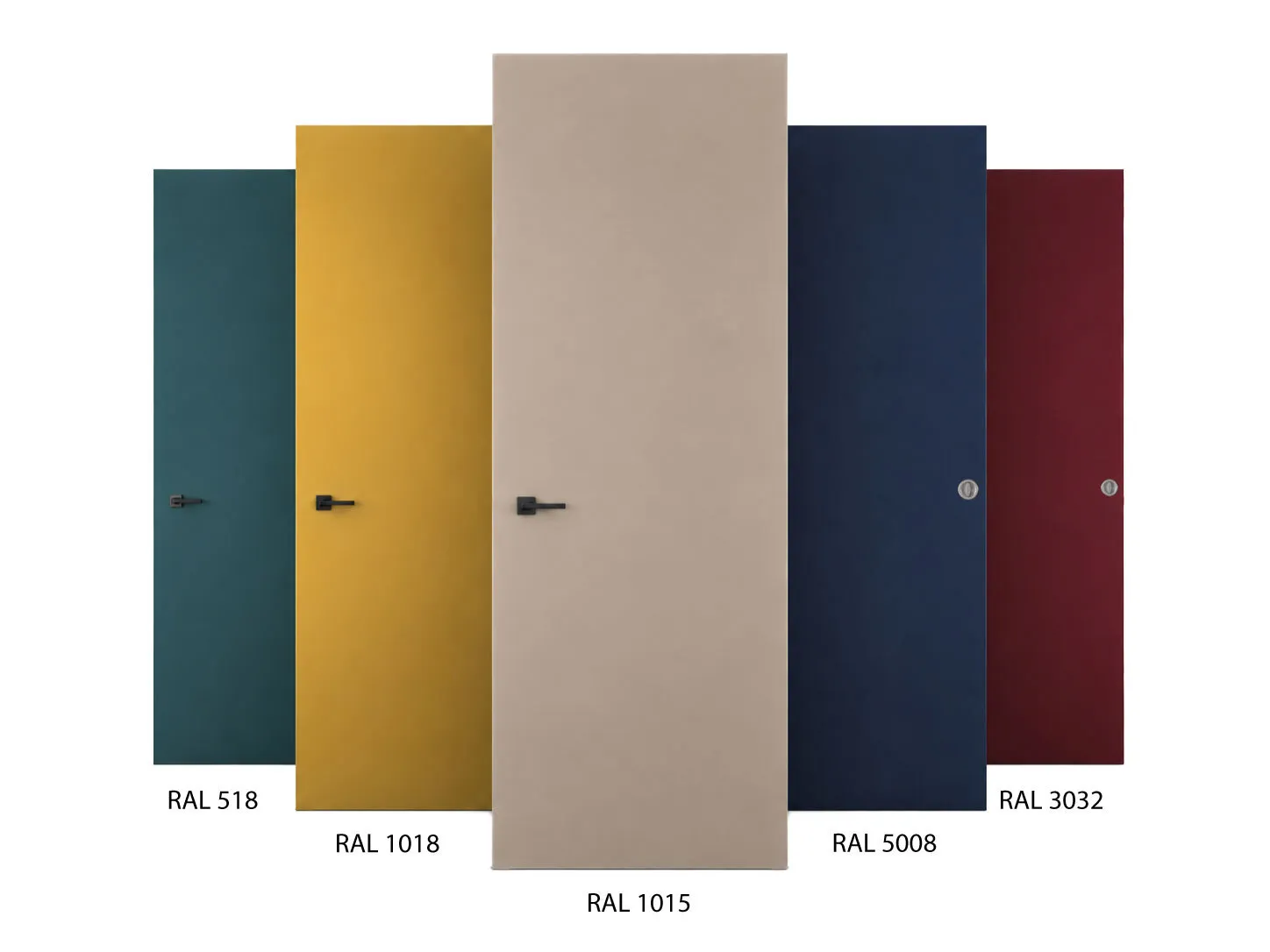
Ideas for colored interior doors - Ermetika
Before concluding this interesting guide, which has allowed you to discover the most popular colors for modern and classic interior doors, we would like to move to the practical side of the article.
Below, in fact, you will find a series of products and ideas for colored interior doors that you can achieve by choosing Ermetika. Through these images, you’ll be able to see in concrete terms everything we have discussed throughout this article.
The examples shown not only present a wide range of colors suitable for any furnishing idea you want to create, but also give you a useful overview for understanding the best textures to use for your project.
2026 trends for interior door colors
Let’s conclude by talking about the new furnishing and design trends for 2026, specifically the colors for modern interior doors most recommended by industry experts.
Among the most fashionable colors, with timeless charm and extreme versatility, we find white in both glossy and matte finishes. Beige, especially in darker shades, proves to be an excellent choice for balancing spaces without overwhelming the eye.
For lovers of pastel tones, the trendiest colors are grass green, sky blue, and taupe gray: finishes that bring serenity and calm and are able to relax the eye in just a few moments.
For a more expressive style, the most fashionable colors for interior home furnishings are dark green and petrol blue. Both, in matte finishes, give character and elegance to rooms, pairing perfectly with natural wood or ceramic furnishings — especially if the goal is to create a vintage atmosphere with a modern twist.
The “no-brainer” choice that satisfies both homeowners and professionals, however, turns out to be the new PANTONE 2026 color: specifically, Cloud Dancer (PANTONE 11-4201).