Style & materials 10/02/2025
Doors and interior design styles: from rustic to contemporary
When defining the soul of a living space, every architectural element contributes to creating a visual and sensory harmony. In this aesthetic dialogue, interior doors are not merely tools for separation but true style statements, capable of anticipating and reinforcing the character of an environment. Choosing the right door is a fundamental design act, a gesture that can elevate an entire interior project. Understanding how the design of interior doors aligns with various furnishing styles is the key to transforming every passage into an experience of coherence and beauty.
From the enveloping warmth of rustic style to the formal purity of contemporary design, there is a door capable of interpreting every vision of living. This journey explores the inseparable bond between doors and interior design styles, offering inspiration to select solutions that are not only functional but also silent protagonists of domestic elegance.
Rustic style: the warmth of materials
Rustic style evokes a world of authenticity, a deep connection with nature and traditions. It draws inspiration from country homes, mountain chalets, and farmhouses, where materials speak a language of sincerity and warmth. In this context, wood reigns supreme, and doors become the most tangible expression of this philosophy.
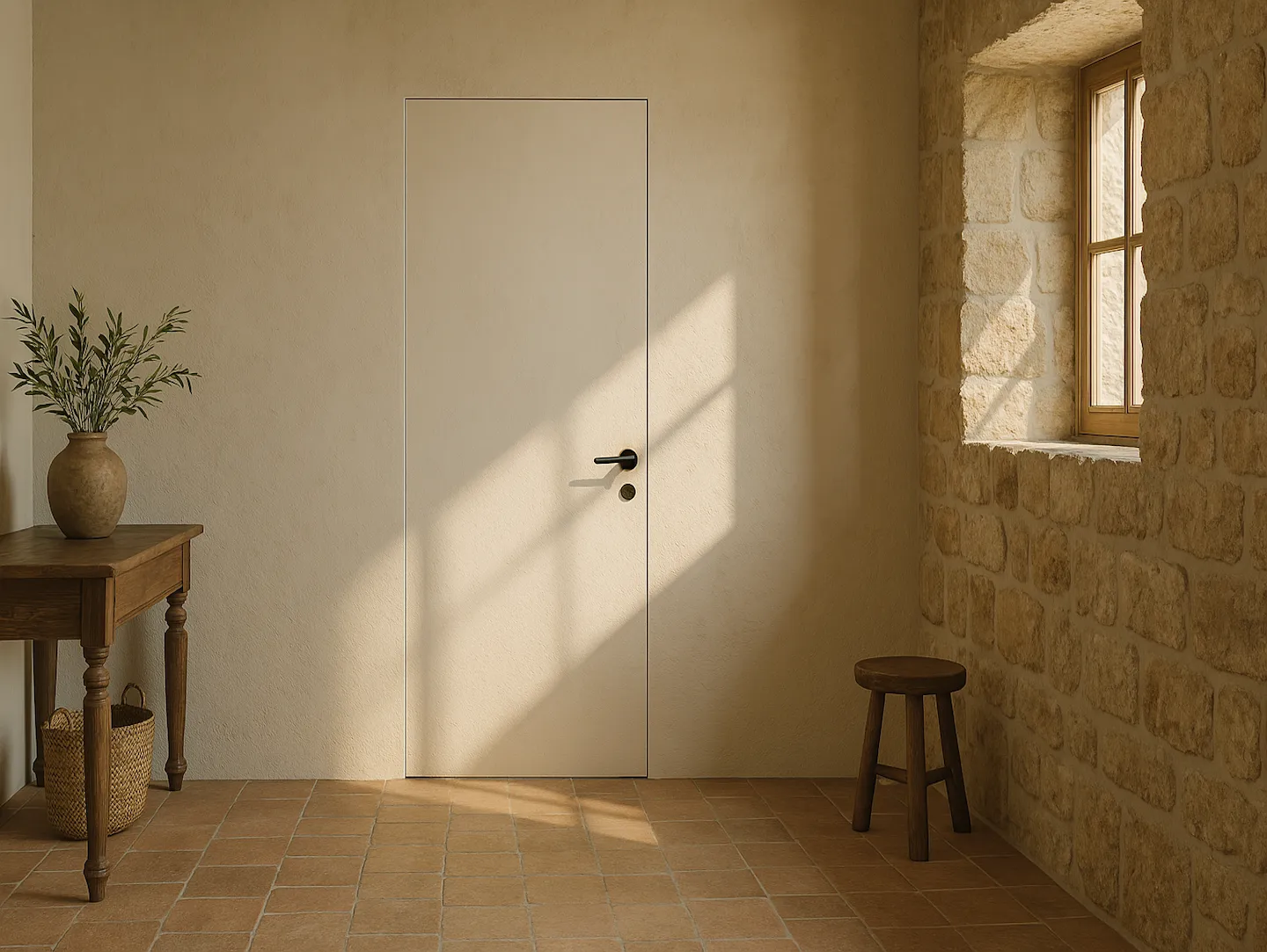
Rustic doors stand out for their evident materiality. Made of solid wood, often from robust species like chestnut, pine, or oak, they proudly display grains, knots, and imperfections. These features are not flaws but distinctive marks that tell a story of naturalness and craftsmanship. Finishes tend to be matte or brushed, enhancing the wood's texture and providing a pleasant tactile sensation. The design of rustic doors favours solid and traditional shapes, often with panelled or vertical slat details reminiscent of old barn doors. Exposed hardware, such as black wrought iron or antique bronze hinges and handles, completes the aesthetic, adding a touch of artisanal sturdiness. A rustic door integrates perfectly with stone walls, exposed beams, and terracotta floors, creating a welcoming and timeless atmosphere.
This natural approach also connects to modern interpretations of wood, such as the harmony between wooden doors and boho style or the essential combination of wooden doors with Scandinavian design.
Modern style: the purity of lines
Modern style, born in the 20th century, celebrates functionality, clean lines, and the absence of superfluous ornamentation. It is an aesthetic that prioritizes geometry, light, and order. In a modern interior, the door abandons its traditional decorative role to become an essential surface, an element that defines space with rigor and discretion.
The design of modern-style interior doors focuses on linearity. Panels are typically smooth, free of elaborate frames or mouldings. The preferred material is often lacquered wood, offering a flawless finish and a wide range of colour possibilities. Matte lacquered doors, in particular, provide a velvety and sophisticated look, while glossy ones amplify light, making spaces feel more airy. An alternative of great appeal is represented by wooden doors with horizontal grains, emphasizing the modernity of the design and creating a sense of spaciousness. As for hardware, the choice falls on minimalistic handles in satin or chrome steel, or even push-pull systems that eliminate any protrusions for absolute visual cleanliness.
The potential of lacquered surfaces extends to other contexts as well, making them the ideal pairing for industrial and urban styles.
Contemporary style: creative freedom
Contemporary style is fluid, eclectic, and ever-evolving. Unlike modern style, it does not follow rigid rules but loves to mix elements, play with contrasts, and personalize spaces with boldness and sophistication. In this scenario, contemporary doors become a field of aesthetic experimentation, sculptural elements that can define the character of an entire room.
The most representative solution of contemporary style is undoubtedly the flush-to-wall door. Without visible frames or jambs, it integrates seamlessly into the wall, creating a continuous and minimal surface. This architectural choice allows for extraordinary creative freedom: the panel can be painted the same colour as the wall for a camouflaged effect or covered with wallpaper, panelling, or other materials to transform it into a surprising decorative element.
Full-height doors, extending from floor to ceiling, are another impactful expression of contemporary style. They emphasize verticality and lend an aura of grandeur and luxury to spaces. The use of glass is also central: large panels of transparent, smoked, or frosted glass, framed by slim black aluminum profiles, create light and airy divisions, perfect for the open-plan layouts typical of contemporary living.
Industrial style: the aesthetic of raw materials
Inspired by lofts and repurposed industrial spaces, this style celebrates the beauty of imperfection and raw materials. Metal, concrete, exposed bricks, and weathered wood are the protagonists of an urban and characterful aesthetic. In this context, doors must be bold and functional.
An iconic solution is the external sliding door with a visible black metal track, often referred to as a "barn door." This type not only optimizes space but also becomes a mechanical and decorative element with a strong impact. The panels can be made of raw wood, perhaps reclaimed, or painted metal. Another option is hinged glass and metal doors, reminiscent of old industrial windows, allowing light to flow while maintaining clear functional divisions.
For a tailored approach to different furnishing needs, discover how to choose the right door model for every industrial environment.
The door as a reflection of personality
Choosing a door is never a secondary detail. It is a statement that reflects the personality of the homeowner and the vision behind the interior design project. Whether it’s the reassuring solidity of a rustic wooden door, the formal cleanliness of a modern lacquered model, or the architectural boldness of a contemporary flush door, every solution contributes to writing the narrative of your space.
Take the time to observe your furnishings, understand the atmosphere you wish to create, and imagine how a door can complete and enrich that vision. Let yourself be inspired by materials, shapes, and colours, and you’ll discover that the design of interior doors is one of the most powerful tools for creating a home that is a true expression of your style.