
News & Trend 03/24/2026
Matching doors and skirting boards: ideas and trends for 2026
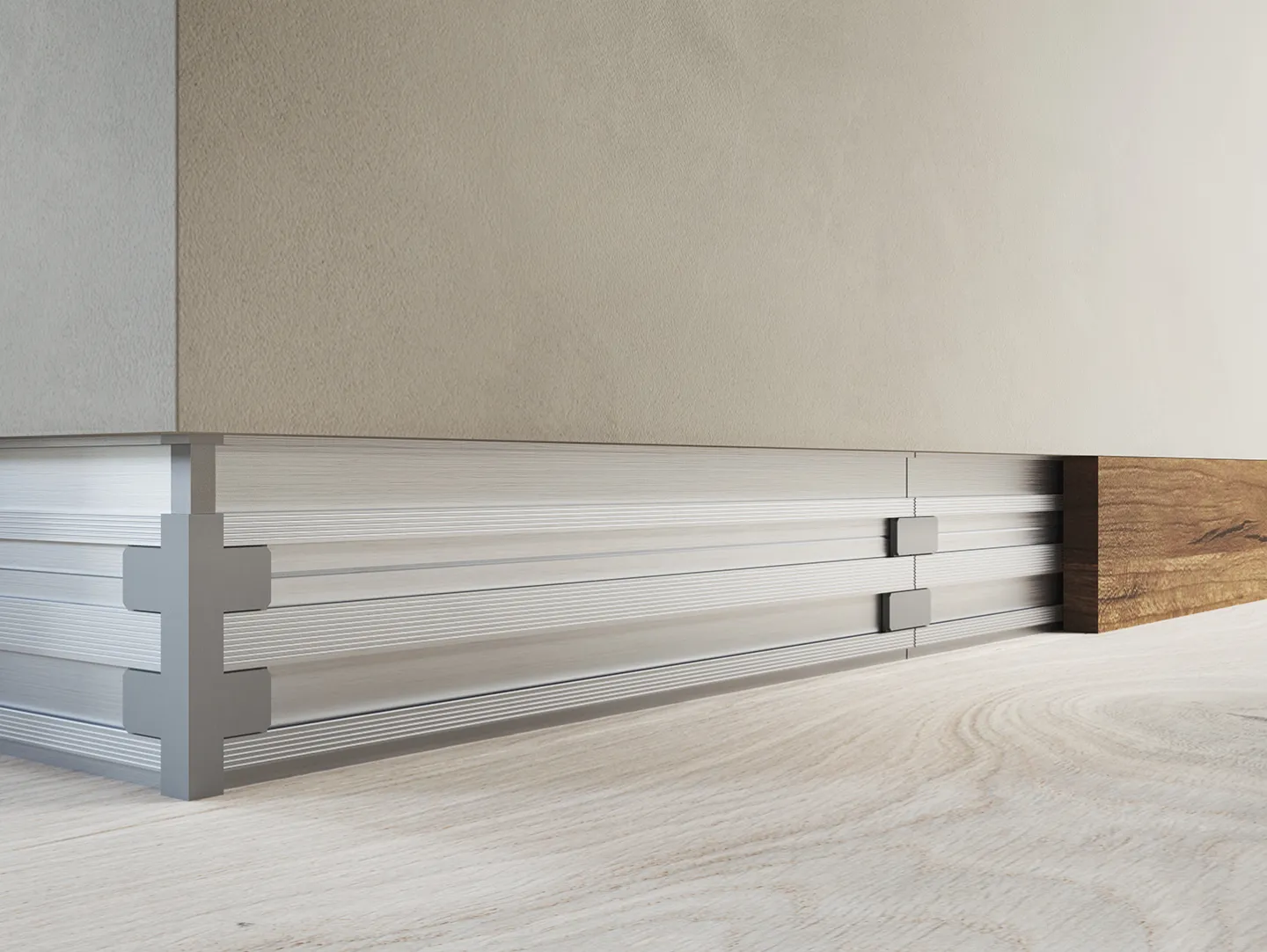
To create a cohesive and balanced interior design, it is important to carefully consider how to coordinate doors and skirting boards. Doors, in particular, are a highly versatile element which, when used thoughtfully, can best bring out the character of a room.
In this article, we’ll explore the best ideas for matching doors and skirting boards based on colour, interior design style and, finally, material. Read on to discover the latest trends for 2026 in this area.
Matching doors and skirting boards by colour
Choosing a colour for a piece of furniture, a door or a skirting board like the Absolute Rush by Ermetika, is not a decision to be taken lightly. Behind every shade, in fact, lie specific reasons that can completely transform the visual impact of a room.
There are colours that convey vitality, such as orange, yellow or bright green, which are suitable for spaces such as living rooms or very dynamic environments. Other colours, on the other hand, have a soothing effect on the eye, such as blue, beige or matt white.
Weighing up the various shades, depending on the room you intend to furnish, is vital for creating a harmonious balance and a visually pleasing effect. But how do you go about it? Here are 3 ideas for matching doors and skirting boards based on their colour:
- Use light colours – to enhance the perception of space and make the most of the room’s natural light without resorting to excessive artificial lighting. Colours such as white, dove grey or beige are perfect for doors and skirting boards, especially where the floor and walls are darker shades;
- Choose dark colours – where you want to achieve the opposite effect to the previous example. You can opt for a dark shade such as green, petrol blue or brown when using light colours for the furnishings and walls. This approach serves to highlight the door and skirting boards, creating a contrast that nevertheless blends harmoniously with the surroundings;
- Opt for different but complementary colours – finally, you can choose to use a skirting board in the same colour and texture as the floor, whilst applying a complementary shade to the door. In this case, there is visual continuity between the floor and the skirting board, whilst the door features a different, more striking colour to highlight its features: this is particularly effective if you wish to use a flush-mounted sliding door.
How to match doors and skirting boards to your interior design style
As well as the choice of colour – which is particularly important given the psychology behind each finish – it is also essential to choose the right furniture whilst taking into account the stylistic effect you wish to achieve.
To explore this topic further, we will consider three interior design styles that have had a significant influence on the Italian market over the last 20 years. We are talking about the classic style, the modern/industrial style and, finally, the Nordic or Scandinavian style. Here, then, are three ideas for matching doors and skirting boards according to your home’s interior design style:
- Classic style – the most widely used in homes from the 1990s to the 2010s. Simple furnishings, tiled floors and clearly visible skirting boards, with doors typically in dark brown. If you want to preserve this clean and fairly dynamic style, the best advice is to continue choosing doors and skirting boards made of the same material and in the same colour, opting for steel or brass finishes (especially for handles and locks);
- Modern/industrial style – the modern style favours clean lines and, above all, practicality. The key concept here is minimalism, which is reflected in the use of continuous, uninterrupted lines. This involves flush doors that blend seamlessly with the wall. As for skirting boards, you can opt for very slim, rectangular ones, so as not to disrupt the line between the wall and the floor, whilst still providing protection against knocks;
- Nordic or Scandinavian style – this style is based on a philosophy centred on functionality and light. Every room furnished according to this approach appears very clean, uncluttered and bright. The main material to use is natural wood, which lends the room a sense of brightness, order and calm.
Matching doors and skirting boards by material
The final factor to consider, in order to create a harmonious and functional effect, is the choice of material. Below, we will look at three textures that can be used – particularly for doors and skirting boards – when designing a space with a modern, minimalist feel.
To be precise, we’ll be discussing natural wood, aluminium and glass. The latter is certainly a bolder choice but, in the right context, it can elevate the design of the entire home by challenging the classic conventions used up to now. So here are our three ideas for matching doors and skirting boards based on their material:
- Natural wood – natural wood is a highly versatile and stylistically beautiful material. It suits a range of styles, such as industrial and Scandinavian interiors. Doors and skirting boards in natural wood are an excellent choice, particularly if you stick to lighter shades. Thanks to its grain and irregular tones, wood is perfect for lending elegance, style and dynamism to a room;
- Stainless steel – steel is perfect for use in very simple, minimalist modern settings. Thanks to its characteristics and sheen, it can make a space feel more spacious. It can also be paired with wood, particularly if the wood has a dark finish. The only drawback of steel is that it needs to be cleaned regularly to maintain its appearance;
- Satin-finished glass – glass, particularly in its satin-finished form, is the perfect element to incorporate into modern settings with a high level of stylistic sophistication. It is highly versatile because it can lend a sense of brightness to a room by day and, by night, become a true design feature, especially when properly lit. In this case, you could opt for very slim, backlit skirting boards paired with a sliding door, either made of glass or wood with a glossy white finish. This choice will result in an elegant space with an eccentric character.
2026 trends for doors and skirting boards
In 2026, two styles in particular are all the rage in home décor: the minimalist style with industrial influences and the Scandinavian style, perfect for creating understated, versatile and clean-lined spaces.
Flush-mounted doors are a great fit for these settings. Hinged doors, which help maintain simple lines, are popular in neutral colours such as white or beige. Sliding doors, on the other hand, are ideal for more elegant settings, in pastel shades such as light green, earthy brown or ochre yellow.
But that’s not all… dimensions matter here too, and the trend for 2026 is to opt for full-height doors and slim skirting boards, particularly for living areas with high, airy ceilings.
To discover our full range of products – both standard and made-to-measure – we recommend visiting our website, where, in the dedicated section, you can also use a furniture configurator to choose the combination that best suits your stylistic needs.