
Style & materials 02/11/2026
Scandinavian-style interior design: tips for a Nordic-style home
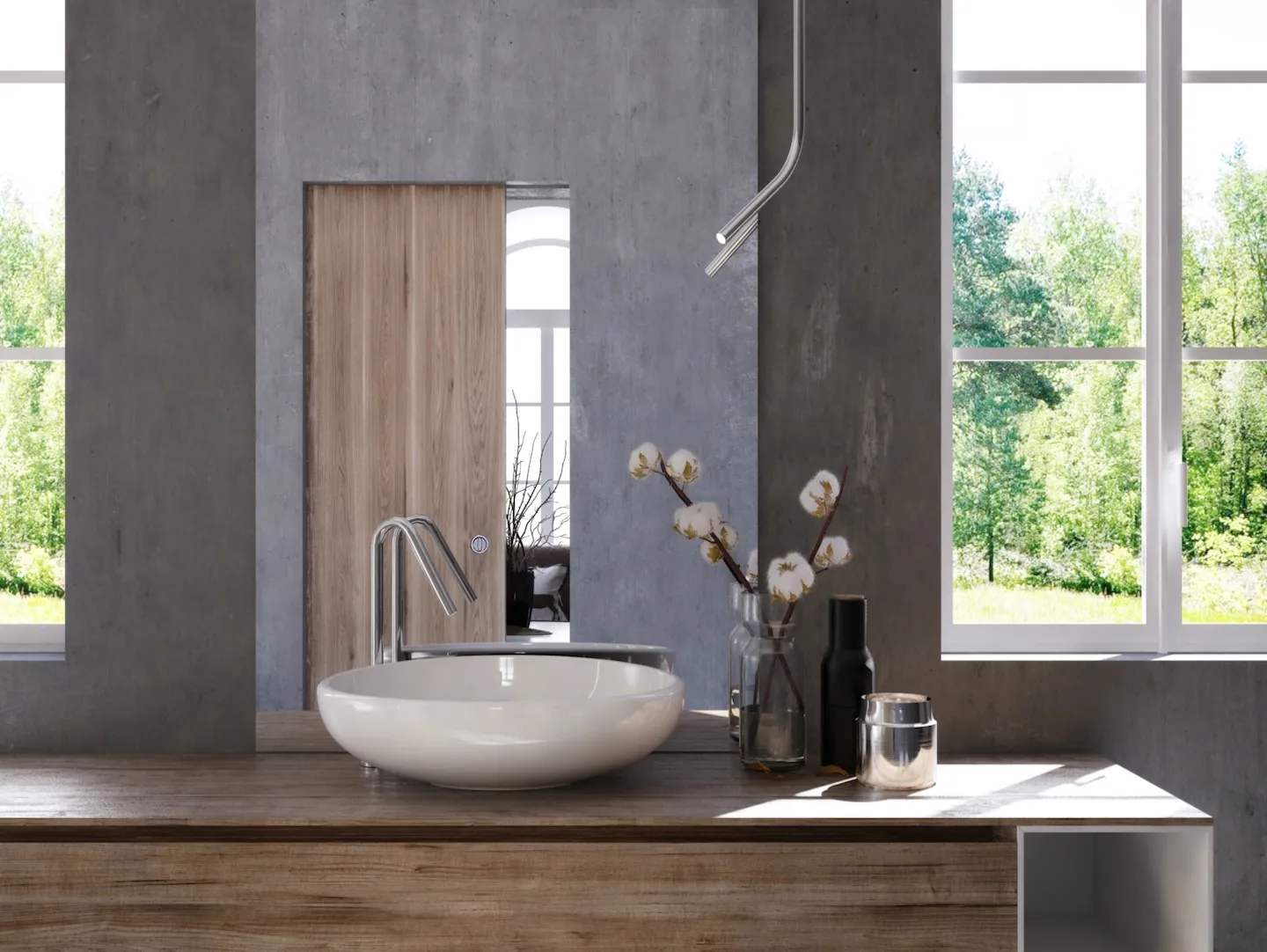
Are you wondering how to furnish your home in the Scandinavian style but don’t know where to start? Then you’ve come to the right article, which will briefly guide you through all the key features you need to bring your project to life.
Below, we’ll discuss how to furnish your home with style, harmony and simplicity. Specifically, we’ll suggest: the colours of Scandinavian interior design, the materials to use, and which design elements to incorporate for a stunning result.
If you agree with us, let’s not waste any more time on this introduction, as this article is quite extensive. So let’s begin by explaining all the key features of the Scandinavian style.
Characteristics of the Scandinavian style
The Scandinavian style is a distinctive approach to interior design that originated in the countries of Northern Europe (Sweden, Denmark, Norway…) and differs from other interior design movements in a number of distinct ways.
First and foremost, it should be noted that the Scandinavian style is based on a philosophy centred on functionality and light. Every room furnished according to this approach is very clean, minimalist and, above all, bright.
Another characteristic is the deliberate choice of certain materials. Everything used in the furnishings must be inspired by elements of nature (such as wood and stone) and maintain a design that is as natural as possible (without any processing that alters the material).
Colours in Scandinavian-style interior design
Colours in Scandinavian-style interior design
To gain a better understanding of the philosophy behind the Scandinavian style, let’s look at this in more detail by discussing, for example, the colours to use when carrying out the project.
As we have already mentioned, Nordic-style interiors place the focus on the use of natural light.
For this very reason, the colours most commonly used to capture and make the most of light are light pastel shades such as white, often paired with greys and beiges.
The materials used in a Scandinavian-style home
The materials used in a Scandinavian-style home
When we think of the Nordic countries, the first material that springs to mind is undoubtedly wood. Indeed, it is the cornerstone of Scandinavian interior design.
In most design projects that follow this philosophy, various types of wood are used, preferably light-coloured woods such as oak, pine, birch or ash.
This elegant, natural and versatile material can be perfectly combined with other elements which, together, lend the entire project style, practicality and a clean, uncluttered look. I am referring, for example, to stone, metal and glass.
The windows of a Scandinavian-style home
Returning to the previous paragraph, what better use is there for glass than in a window? Natural light is one of the most essential principles to be observed in Nordic interior design.
It goes without saying, therefore, that a home designed and furnished in this style must feature large windows in every room to flood the house with natural light.
Here too, the materials and colour of each window frame play an important role. Choose light, glossy colours and materials with textures that evoke the look of wood, even where real wood cannot be used.
You can find windows on the market made from other materials, such as PVC, which can be customised to suit the style of your home.
Scandinavian-style interior design: doors
Scandinavian-style interior design: doors
Choosing the perfect door requires attention to detail, to ensure that every element contributes to the overall harmony of the room.
The first step is selecting the material. Opting for light-coloured wooden doors, such as natural oak or bleached pine, is a safe choice for achieving the bright and airy effect typical of the Nordic style.
Depending on the room you intend to furnish, you’ll need to decide whether to go for, say, a flush-fitting hinged door or, alternatively, a sliding door. When it comes to Scandinavian-style doors, the choice of finishes should also be made after carefully weighing up the options.
For a contemporary touch, you can incorporate metal or glass details. A slim black aluminium profile or a frosted glass insert can add character to the door without compromising its simplicity.
Scandinavian-style interior design: flooring
Scandinavian-style interior design: flooring
Before we continue with our article and explore how to furnish different rooms to perfection, we’d like to take a closer look at flooring.
Flooring is, in fact, a key element in Scandinavian-style interior design because it adds character to the overall look, creating harmony and a sense of continuity between the different rooms.
A Scandinavian-style home typically features parquet flooring throughout, using light-coloured woods such as birch or ash. However, this solution does require a certain level of investment.
If you’d like to use more affordable materials that can replicate the look of natural wood, you could opt for porcelain stoneware tiles with wood-effect textures and finishes.
Furnishing your kitchen in the Scandinavian style
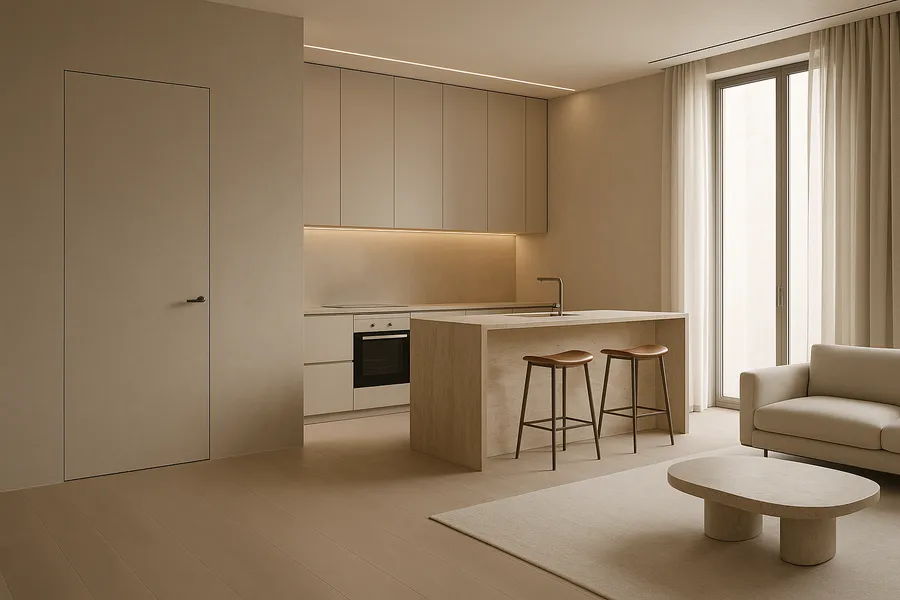
To furnish your kitchen in a Nordic style, the key principles to follow are: clean lines, minimalism and practicality. The perfect design features a combination of furniture with simple, clean lines, featuring frosted glass inserts and polished quartz worktops.
When it comes to the upholstery of the chairs, or the curtains to be hung in the large windows, it is best to opt for light textures, such as linen or cotton – materials that add warmth and softness without overwhelming the eye.
In this setting, even the door can become a key element in defining your kitchen’s style. A sliding door, in light wood or matt white, is ideal for separating the kitchen from the living area whilst maintaining visual continuity and harmony.
When it comes to choosing a table, you could opt for a solid wood model or, to lend the kitchen a touch of class and elegance, choose a light matt glass top.
Furnishing your living room in the Scandinavian style
A Scandinavian-style living room should be designed according to two very specific principles: comfort and practicality. In this space, it is best to choose a few well-proportioned pieces of furniture: a sofa with soft lines, a rug made from natural fibres and a minimalist bookcase.
The light colours of the living room furnishings can be contrasted with muted wall colours, such as dark beige or dove grey, as well as by adding lush green plants.
Avoid adding too many details, such as shelves or pictures, to the walls so as not to make the room feel cluttered. The Scandinavian style is minimalist.
When choosing a door, especially if your home has high, airy ceilings, you could install a full-height sliding door: perfect for visually expanding the space and lending the décor a sense of grandeur.
Furnishing your bedroom in the Scandinavian style
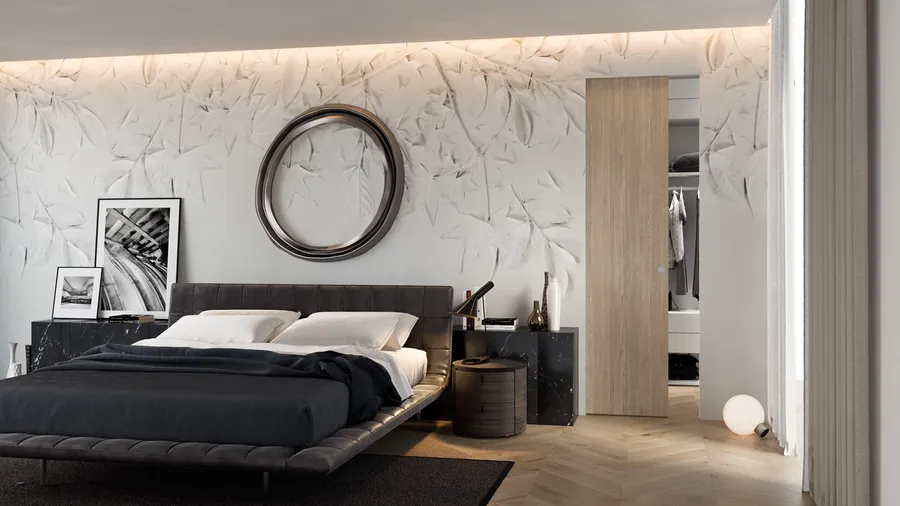
A bedroom designed in the Nordic style aims to achieve the highest possible quality, particularly in terms of comfort and relaxation. Order is essential here: every element must contribute to a sense of calm and balance.
In the bedroom, opt for shades ranging from white to beige and pearl grey. On the wall opposite the bed, you could hang a small, round mirror with a wooden frame. This will make the space feel larger and reflect natural light.
The bed, bedside tables, wardrobe and sideboard should all feature clean, uncluttered lines. The bed linen, on the other hand, should be soft and light (preferably cotton) in neutral colours.
Furnishing your bathroom in the Scandinavian style
A complete and functional Nordic-style bathroom features wall-mounted units in light wood paired with ceramics in clean, linear shapes. As well as making a striking visual impact, the wall-mounted units make it easy to keep the room clean.
The accessories that complete the bathroom décor should be few but carefully chosen. Opt for glass storage units, textiles in neutral colours and – why not? – lush, cascading plants that add a splash of colour contrasting with the light tones.
The bathroom décor is rounded off with the choice of a concealed sliding door. This feature is perfect for ensuring excellent ventilation and thus preventing damp patches and mould from forming on the walls.
Read the article Sliding doors to divide spaces to find out more.