
Product focus 10/21/2025
Flush doors for small spaces: intelligent minimalism
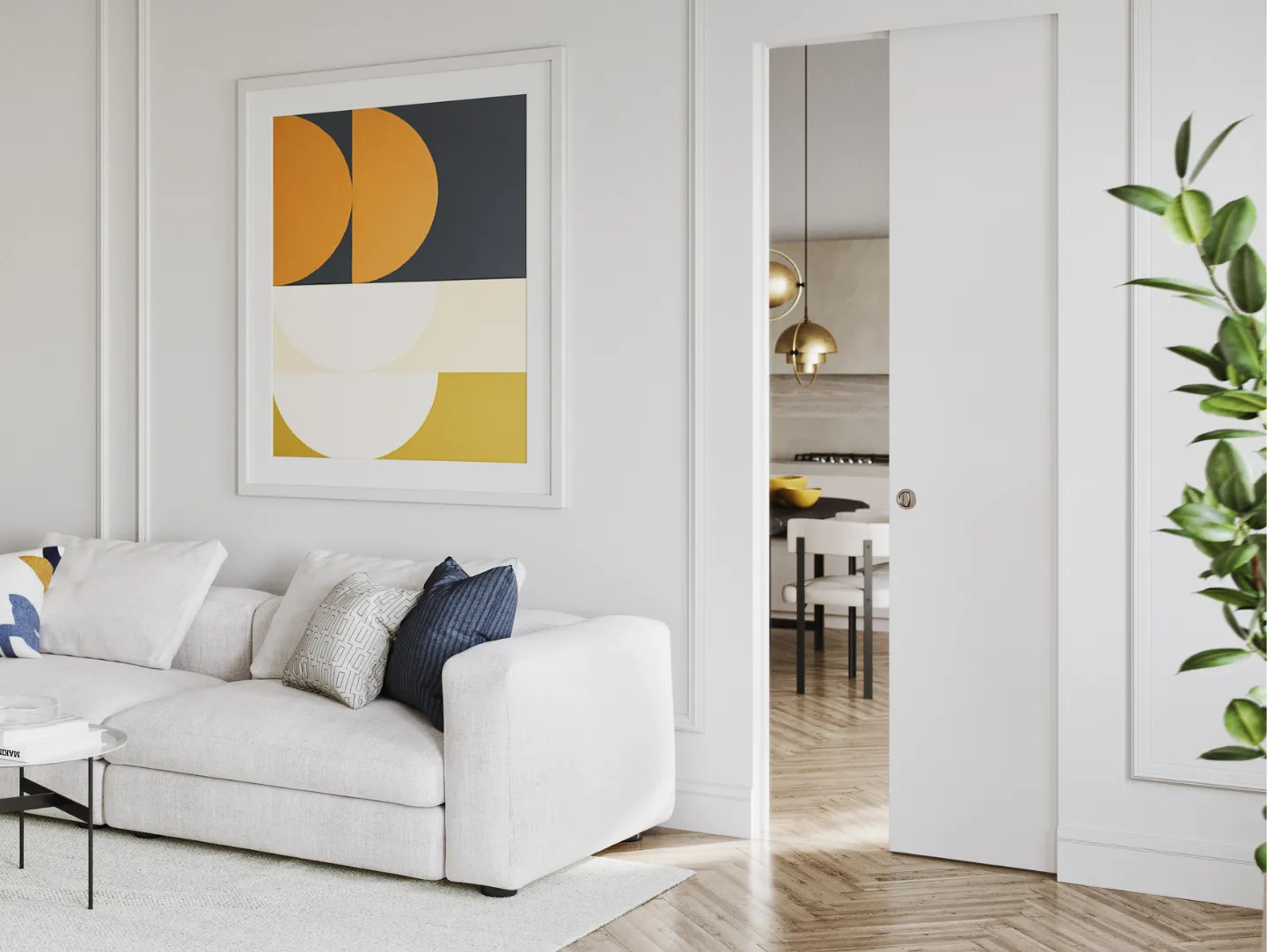
In contemporary architecture and interior design, space optimization has become a top priority. Modern living spaces, often characterized by limited square footage, demand solutions that seamlessly combine functionality and aesthetics. Flush doors emerge as a sophisticated and ingenious response to this need, transforming a functional element into an expression of pure minimalism.
These doors, free of jambs, frames, and architraves, integrate seamlessly into the wall, creating a continuous and homogeneous surface. The result is a visual impact of great cleanliness and linearity, contributing to a perception of more spacious, bright, and orderly environments. Choosing a flush door is not just a style decision but a strategic choice to maximize every available centimeter.
The elegance of invisibility: how flush doors work
The secret of flush doors lies in a special frame designed to be embedded and plastered together with the wall. This system allows the door panel to align perfectly with the surrounding wall, becoming almost invisible when closed. The door leaf can be painted the same color as the wall, covered with wallpaper, or enhanced with textured finishes, offering endless customization possibilities.
This mimetic ability is at the heart of their appeal. By eliminating any protruding elements, the typical visual interruption of traditional doors is removed. Space flows unobstructed, and the perception of the environment expands. In a studio apartment, a narrow hallway, or a small utility area, this detail can make a substantial difference, providing a sense of airiness and openness otherwise unattainable.
Concrete advantages for small spaces
Beyond their undeniable aesthetic value, flush-to-wall doors offer practical benefits, especially in contexts where space is limited.
Maximum visual continuity
As mentioned, the absence of frames and jambs creates a uniform surface that amplifies the perception of space. A continuous wall, uninterrupted by protruding elements, makes the room appear larger and airier. This is particularly advantageous in small spaces where every unnecessary line can contribute to a sense of clutter and crowding. The door becomes part of the architecture itself, a discreet detail that enhances the volume rather than fragmenting it.
Versatility and customization
Flush doors are a blank canvas for the creativity of architects and interior designers. They can be made completely invisible by painting them the same color as the wall or transformed into a striking decorative element. Boiserie, designer wallpapers, or special finishes can be applied to make them discreet protagonists of the space. This versatility allows them to adapt to any style, from strict minimalism to eclectic decorativism.
Optimization of physical space
In a home with limited dimensions, every centimeter counts. Flush doors, especially in their sliding concealed version, represent the ultimate solution for space recovery. Unlike traditional hinged doors, they do not require a free area for the door leaf to open. This frees up valuable wall and floor space, which can be used for furniture, decor, or simply to improve circulation within the room. When furnishing small spaces, sliding solutions are always a winning choice, as also discussed in the guide to the best sliding doors for small spaces.
Ideal applications for flush doors
Thanks to their versatile and space-saving nature, flush-to-wall doors lend themselves to countless applications, becoming the preferred choice in various areas of the home.
Concealing service spaces
They are the perfect solution for elegantly hiding technical compartments, storage rooms, built-in shoe cabinets, or small laundry areas. The door blends with the wall of the hallway or living room, concealing service spaces from view and maintaining visual order. Push-to-open systems, often equipped with a push-pull mechanism, eliminate the need for a handle, further enhancing the invisibility effect.
Bathrooms and walk-in closets
In a bedroom, a flush-to-wall door can separate the sleeping area from a private bathroom or walk-in closet without weighing down the space. This solution ensures privacy and functionality while preserving the room's aesthetic linearity and cleanliness. Choosing a door suitable for a humid and compact environment is crucial, as explored in the guide on how to choose doors for a small bathroom.
Hallways and passageways
Hallways are often narrow spaces meant solely for passage. Installing multiple traditional doors can create a "boxy" effect, fragmenting the walls and making the space feel even more cramped. Flush doors, on the other hand, maintain smooth and continuous surfaces, giving the hallway a more refined, spacious, and bright appearance.
Flush doors are not merely a trend in contemporary design but an intelligent design solution that elegantly addresses the challenges of modern living spaces. Their ability to integrate perfectly into architecture, optimize space, and offer endless customization possibilities makes them an investment that enhances a property both functionally and aesthetically.
Choosing a flush door for a small space means embracing a minimalism that is not about deprivation but about celebrating form and space. It is a style statement that communicates attention to detail, a pursuit of formal purity, and an intelligent approach to living, where every element is designed to contribute to overall harmony.
Find out more:
Space-saving ideas: hinged or sliding doors?
Doors for small environments: space-saving solutions
Find out more:
Space-saving ideas: hinged or sliding doors?
Doors for small environments: space-saving solutions