
Product focus 14/10/2025
How to choose doors for a small bathroom
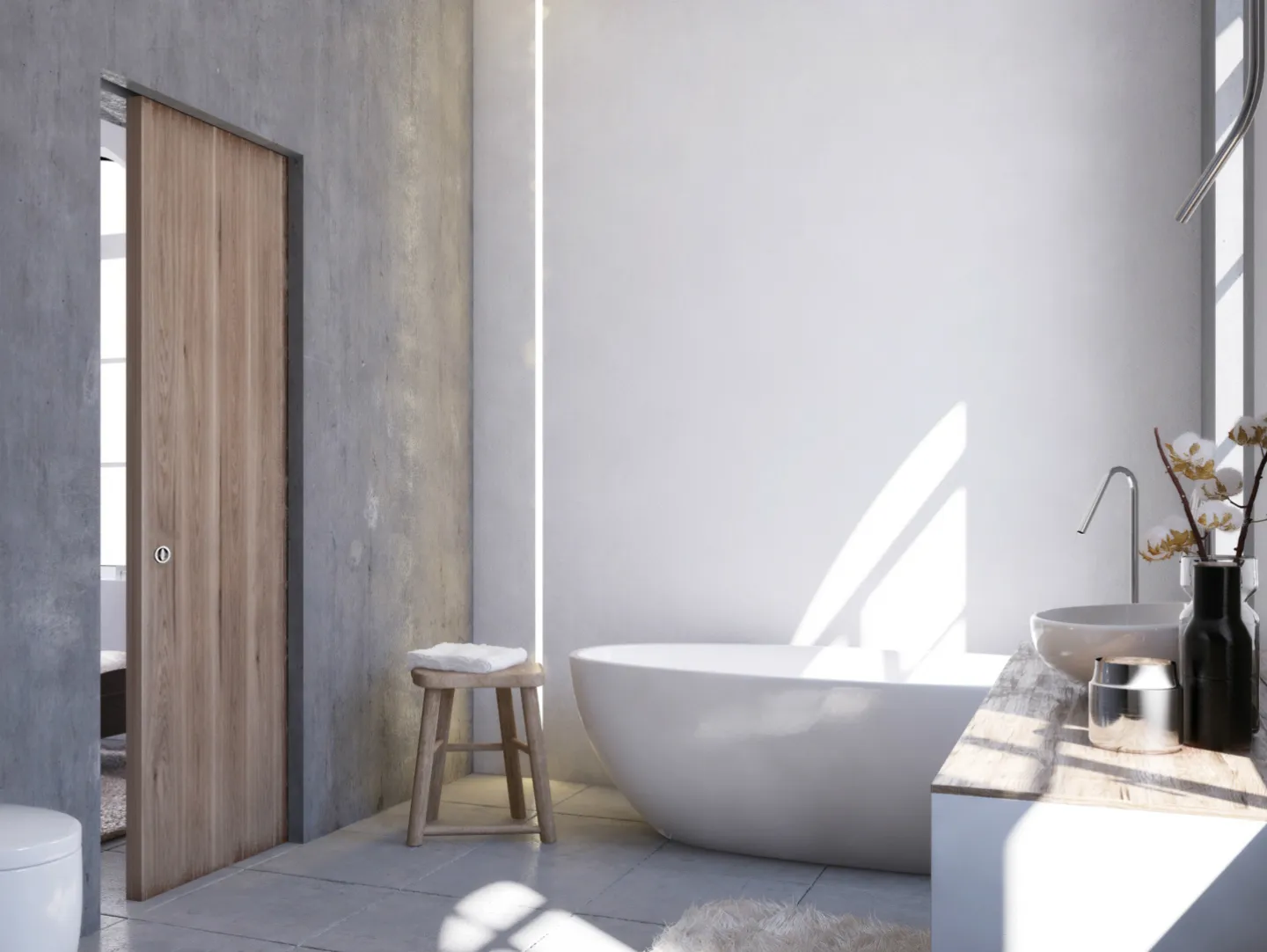
Designing or renovating a small bathroom is a challenge that requires a delicate balance between functionality and aesthetics. In these spaces, every centimeter is precious, and the choice of furnishings cannot be left to chance.
The bathroom is a place of intimacy and well-being, a personal refuge that deserves the same design attention as the living room or bedroom. However, limited space often forces compromises. How can we turn these constraints into creative opportunities? The answer lies in choosing smart solutions that combine formal elegance with impeccable practicality.
The importance of opening: beyond the hinged door
The traditional hinged door, while being a classic and respectable choice, has an undeniable physical limitation: the opening radius. In a cramped bathroom, a door panel that opens inward can occupy a significant portion of the usable floor space, potentially obstructing access to the fixtures, sink, or shower.
This obstruction is not only a practical issue but also a visual one. A door panel that blocks the passage creates a sense of closure and clutter, reducing the brightness and airiness of the space. For those looking to maximize space, it is essential to consider alternatives that eliminate this obstacle, allowing the interior design to breathe.
Assessing the available space
Assessing the available space
Before choosing a specific model, it is essential to analyze the floor plan. Ask yourself these questions:
- How much free space do I have on the wall adjacent to the opening?
- Are there plumbing or electrical systems running through the wall where I want to install the door?
- What is the prevailing style of the house?
These considerations will guide you toward the most suitable opening type, which often, in modern bathrooms, coincides with sliding bathroom doors.
The superiority of sliding doors in the bathroom
Sliding doors represent excellence when it comes to space optimization. Disappearing into the wall (in the case of pocket models) or sliding parallel to it, they completely free up the passage and restore full functionality to the space.
Specific advantages for the bathroom environment:
Specific advantages for the bathroom environment:
- Gain in usable surface area: by eliminating the door panel's obstruction, you recover precious space that can be dedicated to a larger storage unit, a more spacious shower enclosure, or simply greater freedom of movement.
- Improved accessibility: for bathrooms intended for guests or people with reduced mobility, the absence of a hinged door panel significantly facilitates entry and exit.
- Aesthetic cleanliness: sliding doors, especially in flush versions, offer a clean and essential surface that harmoniously integrates with the bathroom's tiles and ceramics.
If you want to delve deeper into the technical and stylistic differences between various models, we invite you to read our dedicated article on The best sliding doors for small spaces, where you will find a detailed analysis of the options available for the entire home.
Materials and finishes: brightness and privacy
Once the opening type is defined, the next step involves choosing materials. In a small bathroom, light plays a crucial role in expanding the perception of space.
Glass: transparency and lightness
Glass doors are a refined choice for those who want to flood a windowless or dimly lit bathroom with light.
- Frosted or etched glass: ensures the necessary privacy, obscuring the interior view while allowing natural light from adjacent rooms to filter through. This solution adds a touch of ethereal elegance.
- Smoked or bronze glass: for a more decisive and sophisticated ambiance, these finishes offer warm reflections and an enveloping atmosphere.
Wood and lacquered surfaces
For those who prefer a clear separation and superior sound insulation, wooden or lacquered doors remain the preferred choice.
- Light finishes: a white, cream, or taupe lacquered panel reflects artificial light, helping to make the space brighter and visually larger.
- Continuity with the wall: choosing a flush paintable door allows you to apply the same finish as the wall (paint, resin, or waterproof wallpaper). This visually cancels out the door, creating a continuous surface that "widens" the room optically.
Resistance to humidity: an essential technical factor
The bathroom is the home environment most subject to temperature and humidity variations. When choosing doors for a small bathroom, the construction quality must never be overlooked.
Ermetika solutions are designed to withstand the test of time, maintaining their mechanical and aesthetic performance. Pocket door frames, made with robust materials and protective treatments, ensure that humidity does not compromise the internal structure or sliding mechanism. The door panel choice should also fall on stable materials that do not deform with changing environmental conditions.
Accessories and details that make the difference
Elegance lies in the details. For a small bathroom, even the choice of handle and lock carries specific weight.
- Magnetic locks: silent and discreet, they offer a smooth and modern closure.
- Privacy lock kits: essential for the bathroom, the locking knob must be ergonomic and integrate with the handle's design. For sliding doors, recessed handles (or "pockets") should allow for an easy grip without protruding, enabling the panel to disappear entirely into the wall if desired.
Choosing doors for a small bathroom should not be seen as a limitation but as an invitation to explore intelligent design solutions. Whether opting for the luminous transparency of glass or the perfect mimicry of a paintable flush door, the goal remains the same: to create a welcoming, functional, and visually pleasing environment.
Find out more:
Space-saving ideas: hinged or sliding doors?
Doors for small environments: space-saving solutions
Find out more:
Space-saving ideas: hinged or sliding doors?
Doors for small environments: space-saving solutions