Technical insights 10/15/2026
How much does a flush door cost: a guide to prices
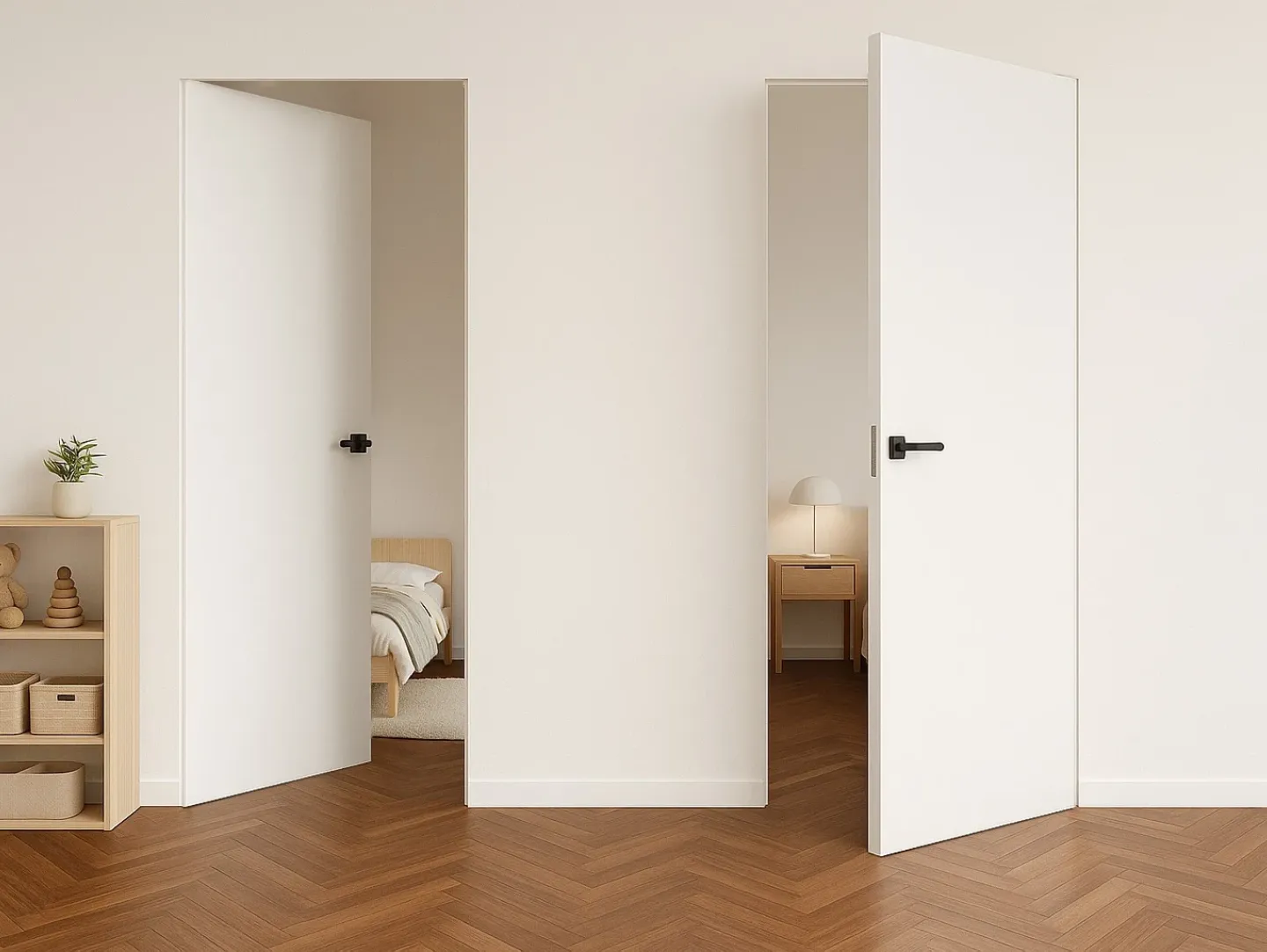
A flush door is an innovative and functional solution with a modern design, ideal for optimising the usability of spaces and enhancing the interior architecture. Before making this choice, however, it is natural to assess the overall investment.
The cost of a flush door depends on various technical and aesthetic factors. In this guide, we outline the main factors that influence the final cost, providing useful criteria to help you make an informed decision on the solution best suited to your budget.
To help you choose the ideal option and understand the differences compared to a traditional door, we invite you to read our article: Flush or traditional doors: differences and advantages.
What affects the price
A flush door features more sophisticated mechanisms than a traditional door. The final price is determined by a combination of various factors: the type of frame, the dimensions of the door leaf, the material used and the wide range of finishes available.
To accurately assess the cost of a flush door, it is essential to consider these key aspects:
To accurately assess the cost of a flush door, it is essential to consider these key aspects:
- Type of subframe and chosen opening system: adaptation to a plasterboard or rendered wall is a factor affecting the price of a flush door. The technology of the opening system can also lead to a variation in cost; for example, choosing between a classic handle and a sophisticated push & pull system;
- Door leaf dimensions: standard-sized doors are cheaper than custom-made or full-height solutions, such as Ermetika’s xREVERx XL model;
- Material: the type of material used for the door and frame directly influences the final price. Doors made of toughened glass, solid wood or high-quality composite materials tend to be more expensive than unfinished doors intended for painting;
- Finishes and fittings: designer finishes and other customised fittings affect the value of the door. This is the case with Ermetika’s Porta Echo model, available in sliding or hinged versions, which allows for the customisation of hinges and profiles, with a surcharge reflecting the quality of the details.
Installation costs
The real complexity of a flush door lies in fitting the sub-frame inside the wall.
The nature of the surface affects the work involved and labour costs:
The nature of the surface affects the work involved and labour costs:
- Installation on a plasterboard wall is the simplest, neatest and most economical option. Particularly suitable for refurbishments, it is very quick to carry out – usually taking one or two days – and involves no demolition costs;
- Installation on a plastered wall requires a more invasive and costly procedure; in fact, it is necessary to remove a section of masonry twice the width of the door, thereby increasing construction costs.
Correct installation of a flush door requires skilled labour, because unlike a traditional door, where the door frame conceals any imperfections in the wall, with a flush door even a single millimetre of unevenness could compromise both the appearance and the smooth operation of the door.
The installation context has a significant impact on the final price:
- For a new build, costs are optimised; the tradespeople work directly on the bare wall, focusing on the installation;
- For a renovation, the final price includes the removal of the old door, the disposal of rubble, the demolition of the existing wall and the subsequent restoration of the plaster.
How to assess a quote
A transparent quote must be clear and specify all items included and excluded. When reviewing one, make sure the following are listed:
- The door frame: the door's skeleton; check that the proposed version is suitable for your wall (plasterboard or render);
- The door panel: the door leaf itself; check whether it is supplied unfinished and ready for customisation on site, or whether it already has a finish;
- The fittings: concealed hinges, magnetic locks, soundproof seals and handles;
- Installation: ensure that the price includes both the fixing of the sub-frame and the subsequent fitting of the door leaf.
To avoid any uncertainty during the quotation stage, Ermetika’s xREVERx model offers an extremely effective solution. As an all-in-one product, it combines the frame, door and fittings within a single, installation-ready package.
Not all flush doors are the same. When comparing several quotes, ensure that the build quality is consistent by specifically comparing:
- The thickness of the door leaf: high-end flush doors are 50–55 mm thick to ensure stability and insulation;
- The structure and external frame: the best models use anodised aluminium profiles. This material is essential for ensuring the plaster adheres perfectly and preventing cracks from forming over time.
A flush door is the epitome of refined aesthetics based on perfect lines. When a product is of poor quality, it is immediately noticeable and tends to deteriorate as the years go by. For this reason, we recommend carefully considering these two key factors as well:
- Ease of adjustment: homes are subject to natural settlement. The hinges must be adjustable along multiple axes; otherwise, over time, the door leaf risks rubbing against the floor;
- Standard height vs. full height: standard flush doors are 210 cm high. Quotes for doors that reach the ceiling are more expensive, but they offer a significantly greater architectural and visual impact, as is the case with the xREVERx XL model, which is 2400 mm high.
When assessing the costs of a flush door, it is important to look beyond the initial price and take into account the quality of the materials and the expertise of the craftsmen. Choosing high-quality components ensures lasting elegance that will enhance your spaces over time.