
News & Trend 04/02/2026
Sliding door painting and accessories: a guide to choice and installation
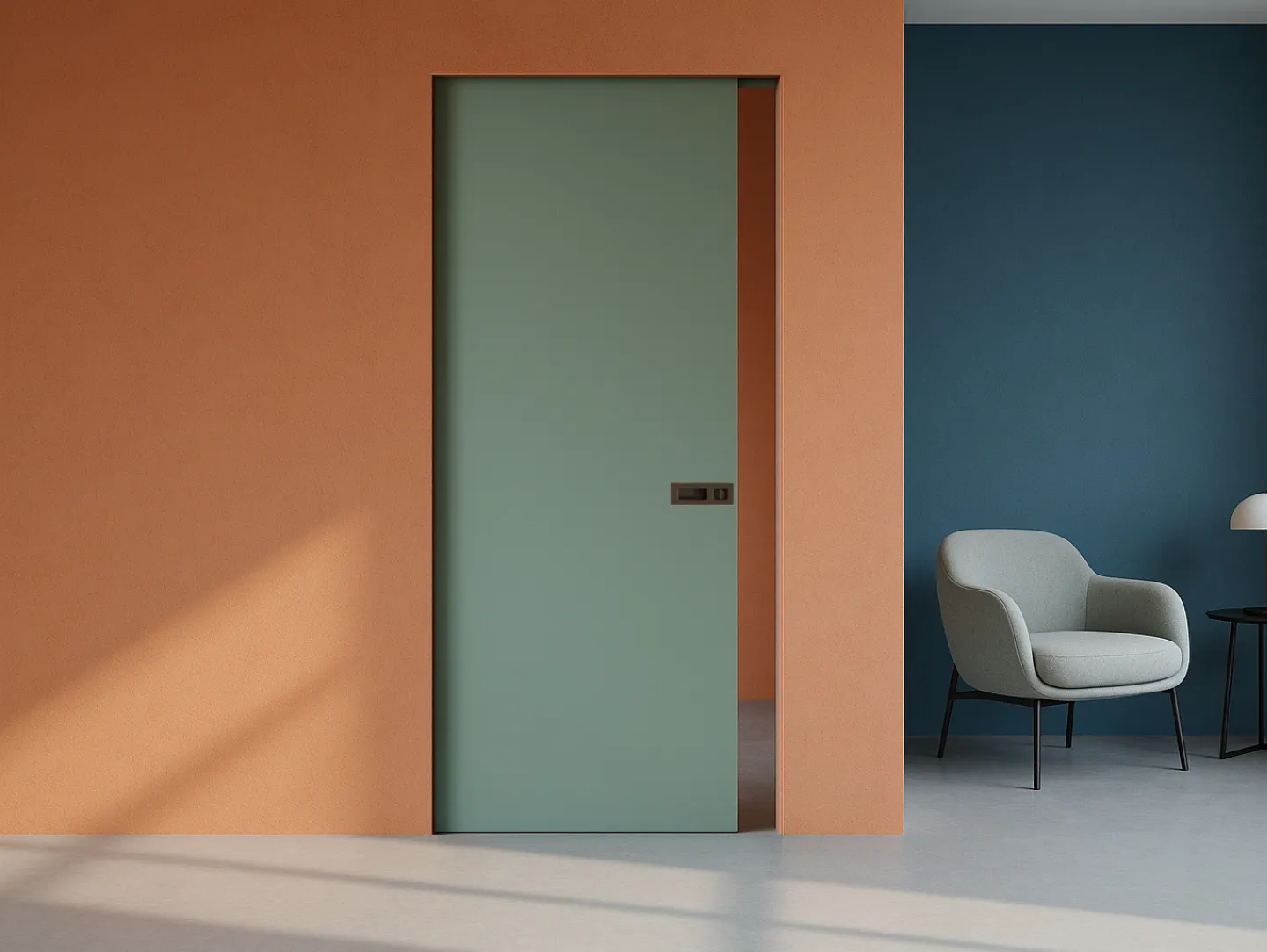
Sliding doors are no longer considered mere functional elements aimed at saving space, but true protagonists of contemporary interior design. Their ability to disappear into walls or slide silently along them allows for the redefinition of domestic volumes with an elegance and fluidity that traditional doors cannot offer. However, the success of a project based on these systems does not depend solely on the aesthetics of the door panel, but on a complex synergy between invisible mechanical components, precision in installation, and accuracy in the final finish.
The invisible engine: hardware and its components
We often focus on the door's design, neglecting the "heart" of the mechanism that allows its movement. The quality of the hardware is what distinguishes a door that slides effortlessly for decades from one that becomes noisy or difficult to maneuver after a short time. As explored in the guide Sliding door hardware: everything you need to know about accessories, there are essential elements that make up the mechanical structure:
- Carriage rollers: these represent the nerve center of the system. To ensure maximum silence, the best models use ball bearings coated in technical plastic materials such as nylon or Teflon. Their robustness must be chosen based on the weight of the door: a solid glass leaf will require much sturdier carriages than a light hollow-core wooden door;
- Ammortizzatori (Soft Close): these devices slow down the door in the last few centimeters of travel, accompanying it gently towards closing. In addition to preserving the structure from violent impacts, they drastically increase safety by preventing accidental finger pinching;
- Handles and Locks: for pocket solutions, recessed handles (cup handles) are preferred as they allow the leaf to slide completely into the wall without encountering obstacles.
Choosing the trajectory: the importance of guides and tracks
The track is the supporting path on which the door travels, and its correct selection is decisive for the aesthetic and functional result. In the article Sliding door guides and tracks: choosing the ideal solution, different options are illustrated to adapt to every design need:
- Ceiling-mounted tracks: fixed at the top, they offer a clean and "suspended" look, leaving the floor free from any visual or physical interruption;
- Floor-mounted tracks: these are integrated into the lower part and offer exceptional stability and support, making them the ideal choice for heavy leaves or installations requiring superior solidity;
- Invisible and magnetic systems: the latest innovations propose completely hidden tracks for absolute minimalism, or magnetic systems that make sliding almost imperceptible and fluid.
The sliding door guide, complementary to the track, has the vital task of keeping the leaf aligned during movement, eliminating annoying "pendulum" effects.
Installation: tricks for a professional result
Many users fear that installing a sliding door, especially a pocket one, may be excessively complex. In reality, by relying on modern systems, the operation is extremely simplified. As explained in Easy installation of sliding doors: tips and tricks, the secret lies in preparation and precision:
- Leveling: this is the most critical step. If the subframe is not perfectly straight both vertically and horizontally, the sliding will be compromised, leading to friction or incomplete closures;
- Flush systems: solutions like the Absolute Evo system are designed to eliminate jambs and architraves, allowing the door to integrate totally into the wall. These systems use pre-assembled aluminum profiles that drastically reduce the chances of human error during installation;
- Fixing and Hanging: once the subframe is firmly fixed and the wall finish is complete, hanging the door panel via the carriages is a quick operation, although it is always recommended to perform it with two people for safety.
The final touch: paints and personalization
The final phase, often underestimated, is what determines the "wow" effect. Especially in flush-to-wall systems, the paint must be chosen carefully to ensure visual continuity. In the post Paints for flush doors: the best choice for a perfect finish, the best solutions for obtaining homogeneous surfaces are analyzed:
- Washable and super-washable water-based paints: these represent the standard for ensuring the same finish between wall and door, providing resistance to dirt and ease of maintenance;
- Water-based wall enamels: they offer a smooth, compact, and highly resistant surface, ideal for those seeking superior durability;
- Choice of finish: a matte finish is ideal for masking any small imperfections and absorbing light softly. Conversely, a glossy finish can be used to create sharp contrasts but requires a perfectly prepared base.
For an impeccable result, the use of a quality primer or undercoat is fundamental to uniform the surface absorption. Models such as Absolute Swing or the reversible xREVERx are supplied with a pre-primed leaf, acting as a true "blank canvas" ready to be painted, covered with wallpaper, or boiserie, according to personal taste.
In conclusion, creating a harmonious and functional environment involves taking care of every single detail, from the invisible mechanics to the color finish, transforming a simple door into a distinctive design element.