Technical insights 09/09/2026
Door frames: how to choose the right size and finish
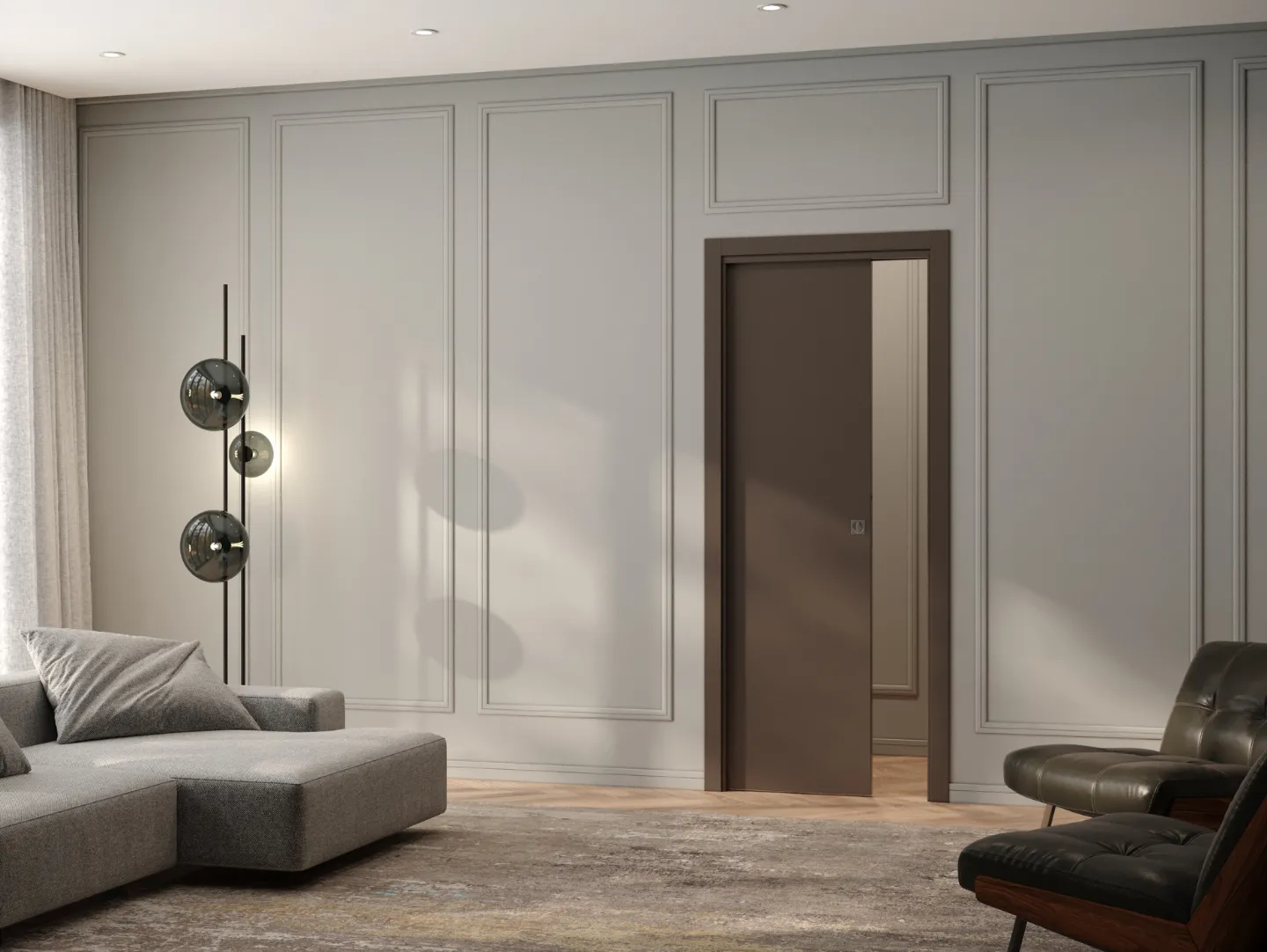
A door frame is that subtle detail which brings order and harmony to a doorway, concealing the junction between the door frame and the wall. Although it often goes unnoticed, its presence defines the aesthetic quality of the entire room. A carefully chosen architrave transforms a simple doorway into a refined architectural feature, capable of complementing the room’s style.
Selecting the right size and finish requires care and consideration. In this guide, we’ll walk you through the essential criteria for making the perfect choice, ensuring a clean, elegant and long-lasting result.
Standard dimensions of architraves
Size is the first factor to consider when choosing a door architrave. The correct dimensions ensure the masonry is perfectly covered and the finish is flawless.
The most common widths
On the Italian market, door architraves are available in a number of standard widths, designed to meet the most common requirements:
- 60–70 mm: the most common option, ideal for walls of standard thickness;
- 80–90 mm: suitable for thicker walls or for those seeking a more striking effect;
- Over 100 mm: reserved for specific contexts where the wall thickness requires it.
When wall dimensions fall outside standard specifications, made-to-measure solutions come into play. Bespoke designs allow the door frame cover to be adapted to unusual thicknesses, ensuring aesthetic continuity even in the most demanding settings.
How to measure wall thickness
Before making a purchase, it is essential to measure the wall thickness correctly. We recommend proceeding as follows:
- Use a rigid tape measure positioned against the door opening;
- Measure the total thickness, including plaster and surface finish;
- Repeat the measurement at several points, as the wall may not be perfectly even;
- Always use the largest measurement taken to avoid the door not fitting properly.
Francesco’s advice
Measure the thickness of the finished wall, including plaster and skim coat, at at least three points within the room. Deviations of 2–3 mm are common even in regular masonry: always use the largest measurement, with a tolerance of ±2 mm, to ensure complete coverage and a flawless installation.
Hinged or sliding: the differences
Not all door architraves are the same. The type of door influences the choice:
- Hinged door: the architrave is fitted to the frame and follows the perimeter of the door leaf, enhancing the appearance of the door opening;
- Sliding door: when the door panel slides into the sub-frame, the architrave must integrate with the sliding system, as with Ermetika’s classic Evolution sliding door.
Door frame finishes and materials
The finish is the aesthetic heart of the architrave. It is the detail that catches the eye and defines the character of the room. Knowing the materials available allows you to make a more informed choice.
Lacquered, laminated or veneered
Each material has distinctive qualities that are worth considering:
- Lacquered architraves
Pros: smooth, elegant surface; wide range of colours; refined, contemporary look.
Cons: requires more careful maintenance and can be susceptible to deep scratches.
- Laminate architraves
Pros: wear-resistant, easy to clean, excellent balance between quality and durability.
Cons: perceived as less premium than other options.
- Veneered architraves
Pros: the authentic beauty of natural wood, timeless warmth and elegance.
Cons: sensitive to humidity and temperature fluctuations, requires special care.
How to match the frame
Colour harmony is the key to a flawless result. For a successful colour scheme, consider these approaches:
- Tone-on-tone with the door: creates an elegant, coordinated effect, where the architrave blends in with the door leaf;
- Matching the wall: this lends a sense of lightness and subtlety, ideal for minimalist interiors;
- Contrasting: this emphasises the doorway, transforming it into a decorative feature with a strong personality.
Let yourself be guided by the overall style of the room, imagining how light and colour will interact with one another.
Durable finishes for high-traffic areas
In corridors, hallways and all high-traffic areas, durability is a priority. For these spaces, we recommend laminate finishes or lacquered surfaces with protective coatings, capable of maintaining their beauty over time whilst withstanding knocks, scratches and everyday wear and tear.
Discover the models in Ermetika’s Classic range, ideal for your projects.
Common mistakes to avoid
Even the most refined choice can be compromised by a simple oversight. Here are the most common mistakes to avoid when choosing door architraves.
Architrave too narrow for the wall
Underestimating the actual thickness of the masonry is one of the most common mistakes. An architrave that is too narrow fails to cover the entire opening, leaving unsightly gaps. Always check the actual measurements before purchasing, taking into account every layer of finish.
Failing to account for the settling of the masonry
Where there is fresh plaster, the wall is still subject to movement and settling. Fitting the architrave too early can lead to imperfections or the trim becoming detached. We recommend waiting until the masonry has fully stabilised before proceeding.
Ignoring aesthetic continuity
A high-quality internal door architrave loses its impact if it clashes with the other elements in the room. For a harmonious result, ensure consistency with:
- the jambs and frames of other openings;
- the skirting board, to create a continuous visual line along the entire wall;
- the room’s overall finishes.
Aesthetic continuity is the secret to a balanced space where every detail is carefully considered.
Find out how to install door frames and architraves: a practical guide to fitting them.
Find out how to install door frames and architraves: a practical guide to fitting them.
Choosing the right door frame means paying attention to dimensions, material and finish, enhancing every doorway with elegance and precision. With the right care, this seemingly secondary element becomes the quiet star of an impeccable style.
Be inspired by Ermetika’s solutions for interior doors and discover how a carefully chosen door architrave can complete your spaces with refinement and harmony.