
Technical insights 10/29/2026
Flush doors: the guide to the system that disappears into the wall
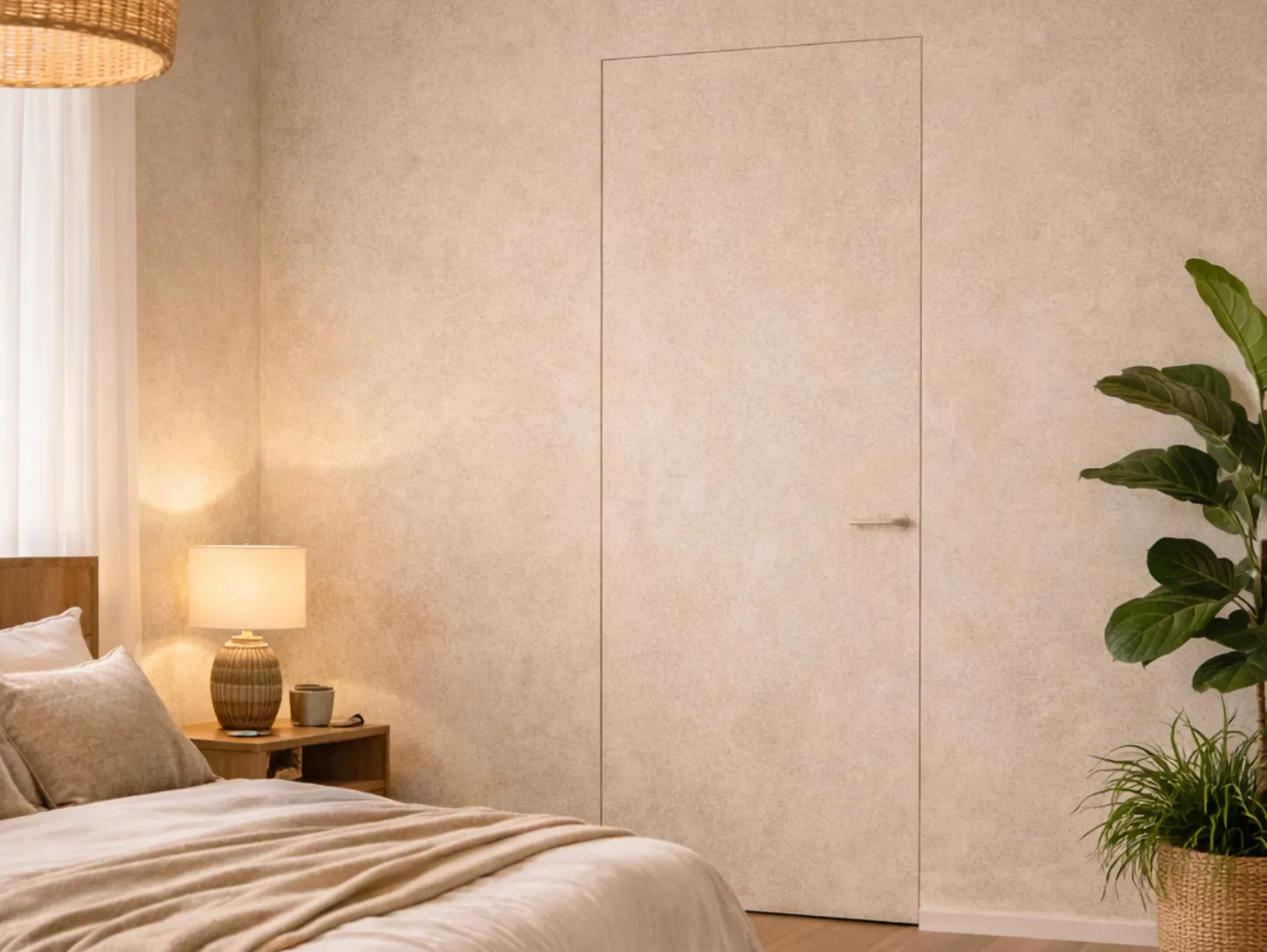
Whether it is called a flush door or a frameless door, the essence of this solution remains unchanged. A celebration of the essential, where technology disappears behind the scenes to make room for the elegance of a visually ordered, timeless space. Read this guide to learn more.
What is a flush door
A flush door is a system designed to integrate perfectly into the wall, eliminating jambs and architrave trims to create a clean and continuous aesthetic effect. Whether you are furnishing a residential or professional setting, the flush door system transforms every passageway into an invisible architectural element, capable of enhancing the space without visual interruptions.
Thanks to a technical frame concealed within the wall, the door leaf sits perfectly flush with the surface. This design creates a striking effect of visual continuity, allowing the door to blend in or, alternatively, to become a refined design feature. Flush doors are ideal for enhancing the formal clarity of contemporary spaces, optimizing the visual perception of interiors and bringing brightness and airiness.
Although it was originally created for minimalist settings, the flush door has gone beyond stylistic boundaries, revealing extraordinary versatility. A concrete example is Ermetika’s xREVERx model, the reversible flush hinged door that allows the entire structure to be customized according to individual living needs. The system makes it possible to reverse the opening direction, whether push or pull, and switch from a right-hand opening to a left-hand opening simply by rotating the frame.
How the system works
The first step towards a proper installation is choosing a high-quality system: a well-built flush door frame not only simplifies installation, but also ensures the door’s stability and durability over time.
The most modern models are specifically designed to facilitate the installation stages, which vary depending on the substrate used:
- On plaster: the site phases require a few weeks to allow the finishes to dry properly;
- On plasterboard: the assembly and fixing phases are much quicker and are completed in just 1–2 days.
A flush door can be painted the same colour as the wall for a refined “see-not-see” effect, or covered with wallpaper to create a continuous decorative surface. If lacquered in a contrasting colour, it instead becomes a focal point of great visual impact. This flexibility allows it to integrate perfectly even into settings that are not purely modern, such as renovation projects for historic buildings.
An example of excellence in the modern field of flush hinged doors is Ermetika’s Absolute Swing model, a solution designed to offer maximum compositional freedom. Installable on both masonry walls and plasterboard, with push or pull opening, it adapts to endless customization possibilities where imagination becomes the only limit in space design.
A flush door can be either hinged or sliding. In both types, the supporting hardware remains completely invisible:
- In flush hinged doors: the door leaf is attached to concealed hinges, which are not visible when the door is closed;
- In flush sliding doors: the door leaf slides on trolleys inside a track recessed into the ceiling or wall.
Flush door or traditional door: when to choose each one
In the context of interior architecture, the traditional door reflects a choice with a classic character. Its role is to visually mark the division between spaces through a design characterized by worked panels and details that require ample clear space within the door leaf’s opening radius. By contrast, the flush door is the emblem of contemporary minimalism: by integrating flush with the wall, it creates an uninterrupted surface and becomes a true furnishing element.
Find out more about the differences at: Flush doors or traditional doors: differences and advantages.
The choice tends to fall on a traditional solution especially in contexts such as:
- Partial renovations: during which no invasive masonry work is planned and construction times are limited;
- A strong scenic presence: the frame and visible architraves help proportion the spaces, especially in rooms characterized by very high ceilings;
- A limited budget: it does not require special aluminium frames, but uses standard ones.
The traditional door is therefore ideal for classic-style interiors, where it adds visual solidity and a touch of traditional elegance. The flush door, on the other hand, is the best choice for minimal and modern settings, where the goal is to enhance the environment as a whole through clean lines and precision in the details.
What to consider before purchasing
A flush door is the ideal choice for optimizing the usability of space. Before proceeding with the purchase, it is advisable to carefully evaluate a few key factors that affect the overall investment:
- Elements that affect the price: the type of frame specifically designed for plasterboard or plaster, the size of the door leaf, whether standard or custom-made, and the chosen design finishes;
- Type of installation: installation on plasterboard is quicker and faster, while installation on plaster requires more structured masonry work;
- Quality: not all flush doors are the same. During the evaluation phase, always compare the thickness and rigidity of the frame structure to ensure long-term stability.
To assess the quote best suited to your project, we invite you to read: How much does a flush door cost: price guide.